Now Available - Alpha-Gal Testing

Alpha-Gal Syndrome: The GI Condition Hiding in Plain Sight

FAST-PASE® is the only broadly available blood test that assesses clinical reactivity to Alpha-Gal.

10K+ tests performed

Enabling the next-gen of allergy treatments

Used in 50+ research programs

This is some text inside of a div block.
The Mammalian Product Allergy

Is it IBS or the Mammalian Product Allergy?

Alpha-gal Syndrome (AGS) causes a range of unexplained symptoms that mimic chronic GI disease, from dyspepsia to anaphylaxis.
Pilot access for Physicians
Patients: Learn When to Test

What is Alpha Gal Syndrome?

Alpha-Gal Syndrome (AGS) is a type of food allergy, caused primarily from the bite of the lone star tick, to a sugar molecule called alpha-gal (short for galactose-alpha-1,3-galactose). Alpha-Gal is bound to mammalian lipids and proteins, except in humans. Practically patients suffering from AGS are allergic to mammalian products, such as beef, pork, lamb, and dairy.
Another unique feature of AGS is that reactions are delayed. After eating foods that contain alpha-gal, the body must first digest and absorb the fat before the allergen enters the bloodstream. As a result, symptoms often appear 3–6 hours after eating rather than immediately.
Many people with AGS are misdiagnosed with conditions such as irritable bowel syndrome (IBS) or other digestive disorders before the real cause is identified.
Key Differentials
IBS-D Overlap
Persistent upper GI distress that doesn't respond to PPIs, particularly post-prandial (delayed).
Unexplained Dyspepsia
Delayed allergic reactions can mimic motility issues due to the timing ofsymptom onset.
Idiopathic Gastroparesis
AGS diarrhea is often explosive and urgent, occurring hours after meals, unlikethe more variable pattern of functional IBS.
The "Consistently Inconsistent" Symptom Profile

Patients often report that they "ate a burger last week and were fine," but are sick today. This inconsistency is due to co-factors: alcohol, exercise, NSAIDs, and fat content of the meal all dramatically alter the threshold for reaction.

Mammalian Triggers

  • Red meat (Beef, Pork, Lamb)
  • Dairy (Milk, Cheese)
  • Butter & Lard
  • Biotech-produced medications

The GI-Only Variant

15%+ of patients have ZERO cutaneous symptoms. No hives, no rash. Only severe abdominal pain, diarrhea, and nausea.

Clinical Pearl

Nocturnal symptoms are a hallmark. If a patient reports waking up sick in the middle of the night after a steak dinner, think Alpha-Gal, not just reflux.

Our son’s experience with Atanis’ Fast-Pase technology has provided us with invaluable insight into his allergen sensitivities. Having precise tools to help shape treatment plans and monitor ongoing progress is a game-changer for families like ours.
Mother of an Allergy Child
,
Clinical Identification

The 3 Alpha-Gal Red Flags

Alpha-Gal Syndrome is often a diagnosis of exclusion in GI practice.
Consider FAST-PASE® for these specific cases.

The "IBS-D" Patient
Refractory GI Symptoms
Patients with negative biopsies who are unresponsive to standard IBS interventions. Crucially, they report severe symptoms (cramping, diarrhea) typically 3-5 hours after a meal.
The "Nocturnal" Patient
Sleep Disruption
Patients waking during the night with severe gastric pain, abdominal cramping, or emesis. This delayed timeline corresponds to the metabolic processing of mammalian lipids from a dinner meal.
The "Gap" Patient
Idiopathic Anaphylaxis
Systemic reactions with no clear trigger, often appearing "random" to thepatient (e.g. after exercising).
Technical Superiority

Functional Confirmation vs. Static Markers

Why FAST-PASE® is the superior choice for definitive diagnosis.

Standard sIgE (ImmunoCAP)
Basophil Activation (BAT)
FAST-PASE®
Static Antibody Measure
Live Patient Basophils
Sensitization (IgE level)
CD63 Expression
Cellular Reactivity (Dose-Response)
N/A
✗ 10–20% Failure Rate
Zero Non-Responders
✗ Low (High False Positive)
Variable
High (Functional Recapitulation)
Broad
✗ Research Use Only
Broad (CLIA Lab)

*BAT relies on patient's own cells, which may be depleted or unresponsive (anergic). FAST-PASE® uses a standardized, immortalized mast cell line for consistent performance.

Resources

Explore trusted resources, research, and insights to better understand Alpha-gal syndrome and its impact.


FAST-PASE® vs. Existing Allergy Tests

Feature
Skin Prick Test
IgE Blood Test
Oral Food Challenge
FAST-PASE®
Accuracy
Highly variable, inconsistent results
Reflects sensitization,
but not real allergy
Gold standard but variable
Patient Comfort
Invasive, risk of skin reactions
Minimal risk, but often inconclusive
High risk of anaphylaxis
Simple blood draw for answers
Time to get answers
May take years of follow up visits
Hours, extremely uncomfortable
3 days, single test
Actionability
Screening only
Screening only
Confirmatory but Risky
Reflects true clinical status with a simple blood draw.

Frequently Asked Questions

What allergens does FAST-PASE® test for?

We currently test for the most common food allergens (egg, milk, peanut, and cashew), and the increasingly prevalent red meat allergy caused by the Alpha-gal syndrome. New allergens will be added as the panel expands.

How is FAST-PASE® different from other allergy tests?

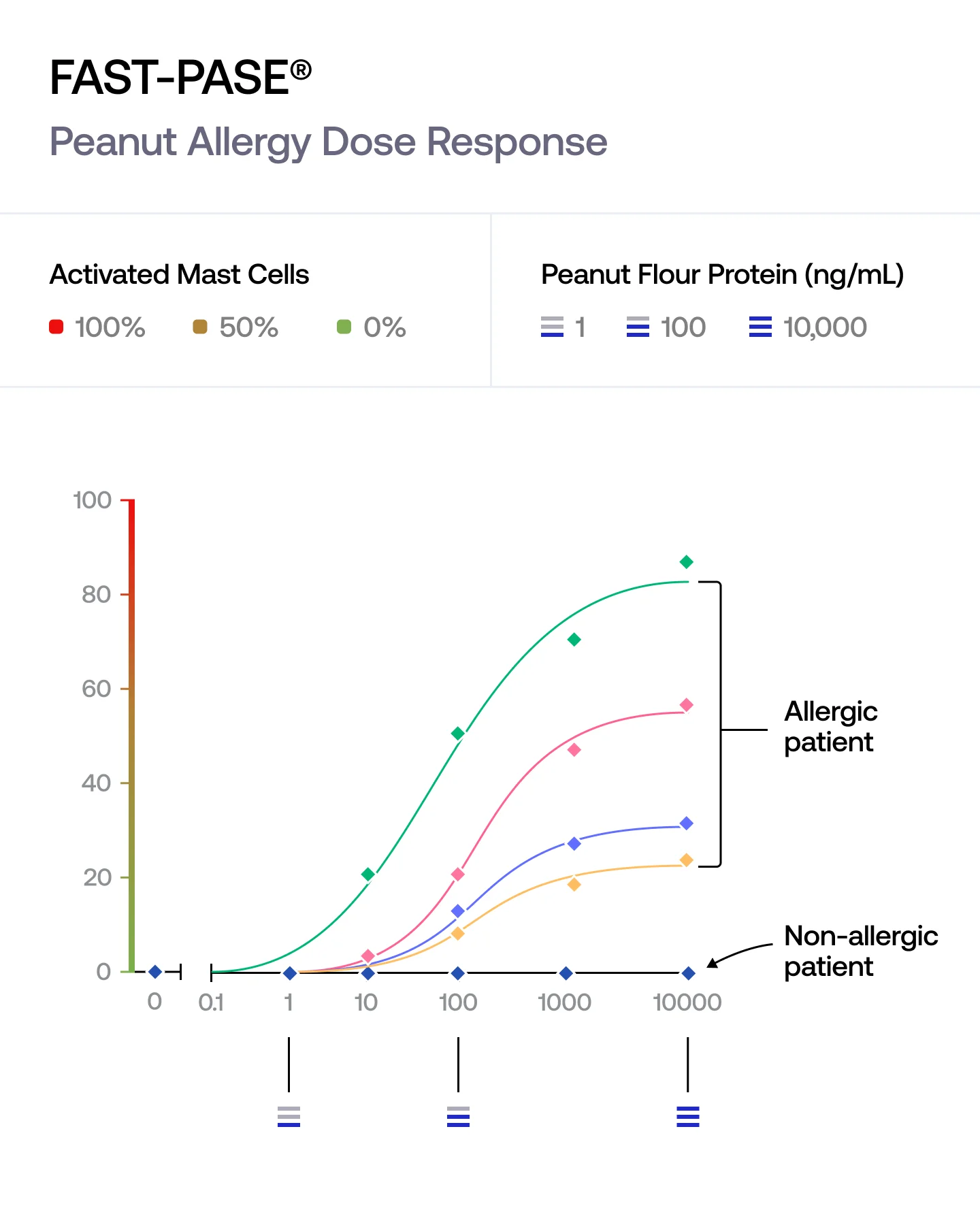
Traditional tests look only at IgE levels or rely on skin exposure, leading to false positives or unclear results. FAST-PASE® measures a cellular response outside of your body, measuring how your blood activates mast cells in response to each allergen, a distinct mechanism from IgE and skin testing, without exposing you to the allergen — all from a simple blood draw.

How long does it take to get results?

Most results are ready within a few days. As soon as your sample is analyzed, your report becomes available through the secure portal, and your provider can review it with you.

Is it safe to use FAST-PASE®?

Yes. FAST-PASE® only requires a small blood sample - no painful skin pricks, no food challenges, and no risk of allergic reactions. It’s the safest choice for both adults and children.

How accurate is it compared to other tests?

FAST-PASE® measures a cellular response, which is expected to correlate more strongly with true clinical allergy than other tests, as has been published in the clinical utility study. Traditional skin-prick tests have about 50% specificity (essentially a coin flip), while FAST-PASE® provides significantly higher accuracy.

Can FAST-PASE® identify the severity of an allergy?

FAST-PASE® will offer insights into reactivity levels in an upcoming update to our test, helping providers understand not only what you’re allergic to, but how strongly.

Is FAST-PASE® covered by insurance?

No insurance is required. FAST-PASE® can be ordered and completed without going through insurance approvals, making the process faster, simpler, and more accessible for families.

Take the test.
Know the truth.

Performance-characterizedvalidated*. Patient-centered.
Safe for children and adults.